
sarga 18, bAlakAnDam
Individual verses with meanings
Listen to the audio of recitation of this sarga
Hari Om.
Let us begin the 18th sarga of the bAlakAnDam with offering our prostrations at the lotus feet of SrIrAma and our sathguru.
This is the all important sarga of the bAla kAnDam, dealing with the birth of the lord SrIrAma. vAlmIki quickly moves on after the birth of the lord to his youthful years in the matter of a few verses! He doesn’t describe in any detail the childhood of rAma and clearly appears like a sage with a mission – a mission to showcase the mission for which lord rAma descended! If you recall the first sarga, in the first few verses he asks nArada about the characteristics of a wonderful human being and he stays true to justifying those characteristics of rAma through the epic. It appears that is the reason why he didn’t describe the growing up of rAma.
Now the focus is on ayOdhya where the emperor daSaratha just accomplished the putrEshTi yajna.
Having completed the putrEshTi sacrifice, daSaratha was overjoyed. He felicitated the kings of the other kingdoms appropriately as per their stature and bid them farewell. Those kings paid obeisance to the sage vasisTha and happily went back on their way along with their army having witnessed the wonderful and successful yajna. The emperor also felicitated the brAhmins and Rtwiks (priests) of the yajna appropriately and returned to his palace in ayOdhya. He felicitated RSyaSrnga and his consort SAnta appropriately and they along with the king rOmapAda left for the anga kingdom. With all guests having returned to their homes with great memories of the yajna, daSaratha, whose desire of begetting sons was about to be fulfilled, lived happily.
Six seasons, i.e. twelve months passed since the culmination of the yajna. Then in the month of caitra, on the ninth day of the brighter half of the month, at a time, when goddess aditi was the presiding deity, the five auspicious planets bRhaspati, sUrya, mangaLa, Sani and Sukra (Jupiter, Sun, Mars, Saturn and Venus respectively) were in exalted positions along with the moon, in the lapse of time (lagna) ruled by the karkAtaka (zodiac sign cancer), while the presiding star (punarvasu) was on the ascendant, the lord of the universe also rose from the womb of kausalya. Lord rAma was born of kausalya in this highly auspicious time, bearing half of the facet of Lord vishNu thus perpetuating the ikshvAku dynasty.
ततो यज्ञे समाप्ते तु ऋतूनां षट्समत्ययु:।
ततश्च द्वादशे मासे चैत्रे नावमिके तिथौ।।1.18.8।।
नक्षत्रेऽदितिदैवत्ये स्वोच्चसंस्थेषु पञ्चसु।
ग्रहेषु कर्कटे लग्ने वाक्पताविन्दुना सह।।1.18.9।।
प्रोद्यमाने जगन्नाथं सर्वलोकनमस्कृतम्।
कौसल्याऽजनयद्रामं सर्वलक्षणसंयुतम्।।1.18.10।।
विष्णोरर्धं महाभागं पुत्रमैक्ष्वाकुवर्धनम्।
kausalya shone resplendently in the unmatched glow of her son, just like goddess aditi did when indra, the wielder of the thunderbolt was born to her! A fourth part of the facet of vishNu manifested in the womb of kaikEyi in the pisces (mIna) lagna when the star pushyami was on the ascendant, endowed with all virtues, pleasant countenance and intellect and bore the name bharata. Remaining facet of vishNu was manifest as lakshmaNa and Satrughna, the skilled warriors in the womb of sumitra while the star ASlEsha was on the ascendance in the karkATaka lagna as the Sun was rising. Thus the king was successively blessed with four children who were virtuous, worthy of him and endowed with stellar brilliance.
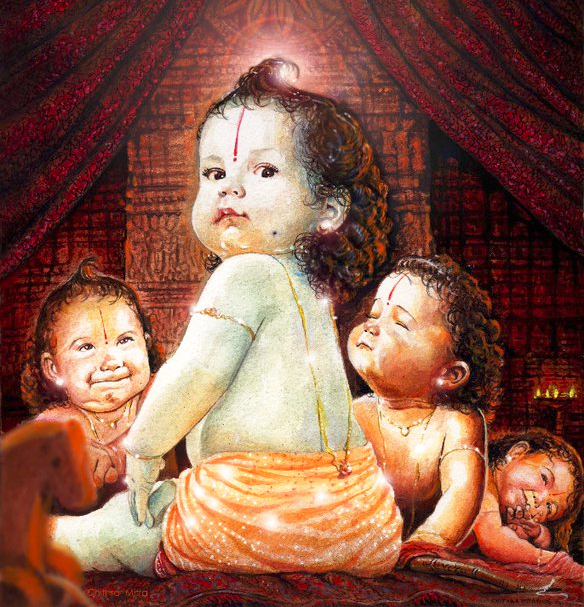
The celestials celebrated – gandharvas sang melodiously, while the apsarAs danced in delight, dEvas sounded the auspicious drums while bestowing fragrant flowers from the skies! Festive fervor engulfed the citizens ayOdhya, as the highways were thronged by artistes and dancers and the ambience reverberated with music from songs, instruments and the utterances of the eulogists. The king distributed gifts, gave away gold and cows in charity to deserving brAhmins. On the 11th day after the birth, the children were appropriately named by the preceptor vasisTha – kausalya’s son was named rAma, kaikEyi’s son was named bharata and sumitra’s sons were named as lakshmaNa and Satrughna respectively.
अतीत्यैकादशाहं तु नामकर्म तथाऽकरोत्।
ज्येष्ठं रामं महात्मानं भरतं कैकयीसुतम्।।1.18.20।।
सौमित्रिं लक्ष्मणमिति शत्रुघ्नमपरं तथा।
वसिष्ठ: परमप्रीतो नामानि कृतवान् तदा ।।1.18.21।।
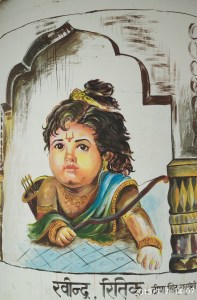
Among the four children rAma stood out for causing the most pleasure to his father and he was acceptable to the whole world like lord brahma, the creator was. All the four sons of the king daSaratha were well versed in all the vEdas; they were endowed with valour and virtue; were heroic and always devoted to the welfare of people. The ever truthful and mighty rAma was the darling of the world, auspicious and spotless like the moon. He was adept in mounting the elephant, riding the horse and chariot, had unmatched skills in archery and was always engaged in the service of his parents. The ever prosperous lakshmaNa, right from his childhood delighted in matters of rAma and was always by his side. He did everything to please rAma, offered his very self in his service. rAma, the best among men (purushOttama) on his part felt lakshmaNa was his very life breath moving outside his body, would not sleep without him and even disliked the tastiest of foods without the company of his dear brother lakshmaNa. Whenever rAma rode a horse to the forest to hunt, lakshmaNa would follow him holding his bow and arrow. Similarly, bharata loved Satrughna more than his own life.
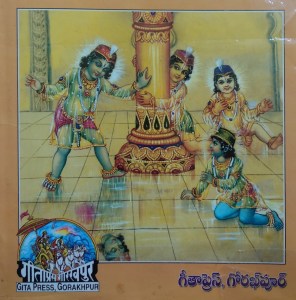
Blessed with such valiant, virtuous, modest, renowned, farsighted and resplendent sons who were ever engaged in the welfare of the subjects, emperor daSaratha rejoiced and reminded one of lord brahma surrounded by gods! All the four sons were well versed in the vEdas, proficient in the science of archery and served their parents most obediently.
[The king’s four sons grew up gradually and years passed. Leap of time!].
Seeing the children growing up, the king daSaratha thought of performing their wedding and started to confer with the preceptors and relatives about the matter. As he was discussing with his ministers, there arrived on the scene, the supremely radiant super sage viSwAmitra. The sage addressed the gatekeepers to let the king know about his arrival and introduced himself as the son of gAdhi, from the lineage of kuSi. The gatekeepers were at once somewhat frightened and hastened quickly to the king to announce the arrival of the brahmarshi viSwAmitra. daSaratha was very pleased to note the advent of the great sage to his court and at once went to receive him along with his preceptors just indra would go forth to receive brahma.
Beholding the vow-upholding sage, shining radiantly with the power of his penance, daSaratha was thrilled and welcomed him with the protocol due to such a sage in accordance with the scriptures. viSwAmitra duly accepted the welcome, inquired about the welfare of the citizens and the prosperity in the kingdom and addressed the king warmly thus: “O king, are your citizens in the cities and villages doing well? And how about your relatives and well-wishers? Are your tributary kings submissive to you? Have you conquered your enemies? Are all the propitiating rituals addressed to gods and forefathers being observed duly in your kingdom?” He then proceeded to sage vasisTha and greeted him warmly followed by other preceptors present there. All of them were delighted in welcoming the sage viSwAmitra and entered the palace.
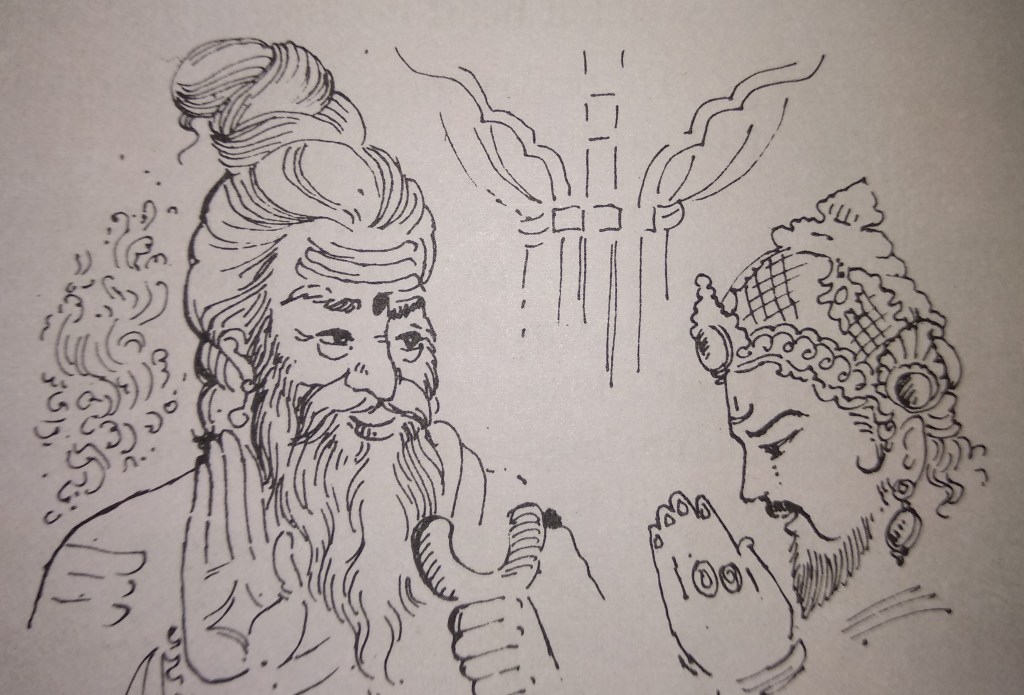
After due honors, each of them sat down in the court in a place that befitted their status. Then, extending warm hospitality to the visiting sage, the king rose and spoke these words: “O revered sage, your advent is akin to receiving amRt (nectar), it is akin to a parched land receiving rainfall, it is like a childless person begetting progeny through his worthy wife, it is reminiscent of a person retrieving his lost property and finding great joy in an achievement. You were an ascetic among kings – rAjarshi – by virtue of strict penance, became a brahmarshi, a supreme sage. You are highly worthy of my reverence. I am so fortunate to be in your pure presence that I feel I have acquired the merits of pilgrimage by your visit. May I pray to you to reveal the purpose of your visit and confer upon me the privilege to be of service to you. O kauSika, you are verily a god to me and hence please do not hesitate to tell me what brings you here. I shall endeavor to accomplish the same in every possible way. I have acquired a unique good fortune of your presence today by virtue of my merits.” Listening to these sincere words spoken so humbly by the able king, the supreme sage of celebrated virtues viSwAmitra was mighty pleased.
Here we conclude the eighteenth sarga of the bAla kAnDam of SrImath vAlmiKi rAmAyaNam and humbly offer it at the lotus feet of SrIrAma. Hari: Om!
jAi SrIrAma.
 rAmabhaktisAmrAjyam