
Hari Om.
Let us begin the sixty seventh sarga of the ayOdhyA kAnDam by offering our prostrations at the lotus feet of SrIrAma and our sathguru.
King daSaratha breathed his last in his sleep. The next morning bards and eulogists came before the day break to wake up the king with auspicious songs. Alas, even the sun rose but the king didn’t! The attendants who get the king ready for the day also arrived. But there was no sign of the king. They ventured near his bed to find out what is the matter and found no movement in him. They were adept at making out the sleep quality from the orderliness of the bedspread and they understood that the king passed away in his sleep. The queens assembled and bewailed the loss of their lord. They vent their frustration at kaikEyI through harsh words and helplessly cried. The entire palace and the whole city was covered with the gloom on account of the passing away of the benevolent king. The proud father of four mighty sons didn’t have even one of them by his side when he breathed last! The ministers were sensible and didn’t want to perform the funeral rites without any of his sons around. They preserved the body of the king in an oil bath. Onwards…
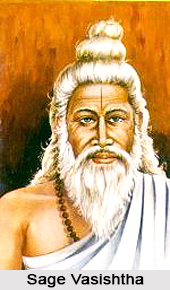
The long night dragged on ayOdhyA, people bewailed the loss of the king all through. There was gloom pervading all over ayOdhyA. At the stroke of the morning, the ministers and the famed royal preceptors mArkanDEya, maudgalya, vAmadEva, kaSyapa, kAtyayana, gautama and jAbali assembled to solve the crisis and approached the chief preceptor vasisTha with their opinions. They said –
“The last one night of sorrow felt like a hundred years! The king grieving on account of separation from his son merged in the elements. Prince rAma along with lakshmaNa has gone to the forest. Princes bharata and Satrughna are in the kingdom of kEkaya enjoying themselves in the home of the maternal grandfather. We must appoint someone from among the ikshvAkus as the king, as without a king the country will go to ruins.
[what follows is a manual of how a country would be without ruled properly by the king. Presented in double negation format]
In a dominion without a king, the thunderous and lightning clouds do not shower the earth graciously.
In a dominion without a king, even a handful of seeds won’t be sown.
In a dominion without a king, the head of the family cannot control anyone at home.
In a dominion without a king, the family life, wealth and finally the truth itself are at peril.
In a dominion without a king, neither are there assemblies of men, nor great gardens nor elegant edifices.
In a dominion without a king, self controlled and austere brAhmins who perform yajnas do not practice their craft.
In a dominion without a king, those who perform grand yajnas do not offer adequate felicitation to the officiating brAhmins.
In a dominion without a king, social festivals and the spirited artists that bring welfare and prosperity to the country do not prosper.
In a dominion without a king, the traders and professionals do not succeed and neither are there performers nor connoisseurs.
In a dominion without a king, well decked young damsels do not venture out in the evenings to sport in the gardens.
In a dominion without a king, the wealthy ones living on cattle and farming cannot rest with their doors open.
In a dominion without a king, young men do not venture out into the forests on fastmoving chariots with their young women for pleasure trips.
In a dominion without a king, mighty sixty year old tuskers adorned with jingling bells won’t move along on the highways with their royal gait.
In a dominion without a king, the swoosh of the arrows and the twanging of the bows during the practice of archers is not heard.
In a dominion without a king, merchants are not bound for distant countries along with their goods for thriving business as they do not feel safe.
In a dominion without a king, the wandering ascetics who are self controlled and have overcome their self no longer wander or break for the day at the inns.
In a dominion without a king, there does not exist welfare and wellness nor can the army stand up to the enemies.
In a dominion without a king, well dressed young men are not excited to ride on elegant horses or chariots.
In a dominion without a king, scholars well versed in scriptures do not venture out into public places for conducting debates.
In a dominion without a king, people do not feel obliged to offer garlands, goodies and perquisites while offering worship to the gods.
In a dominion without a king, the princes do not blossom like the trees do in spring.
A dominion without a king would resemble a river sans water, a forest sans grass and a flock of cows without a shepherd.
The flying flag signifies the chariot, the smoke marks the fire, we are identified by the king and such a king has ascended to the high heavens.
In a dominion without a king, no one can own anything and might of people will prevail as the rich devour the poor like the (bigger) fish eats the other (smaller) fish.
Even those who have contempt for the code of life, atheists and let themselves lose on the society tend to behave themselves for fear of punishment by the king. Like the eye that ever watches over the welfare of the body, the king is the fountainhead of truth and righteousness in the country. The king is the protector of truth, dharma and the good people. He is like the father and mother and is the well wisher of the citizens.
यथा दृष्टि श्शरीरस्य नित्यमेव प्रवर्तते।
तथा नरेन्द्रो राष्ट्रस्य प्रभवस्सत्यधर्मयोः।।2.67.33।।
राजा सत्यं च धर्मश्च राजा कुलवतां कुलम्।
राजा माता पिता चैव राजा हितकरो नृणाम्।।2.67.34।।
Hence the king supercedes even the gods yama, kubEra, indra and varuNa. If the king doesn’t discriminate between the good and the evil, the entire world will be enveloped by darkness. That is how great the king is! O great vasisTha, your word always meant the world to us and we never transgressed it even while the king was alive, just like the sea never transgresses the shore. Therefore, O lord, please anoint one of the sons of king daSaratha, a scion of the ikshvAkus as the king and save this kingdom from resembling a forest”.
Here we conclude the sixty seventh sarga of the ayOdhyA kAnDam of SrImath vAlmiKi rAmAyaNam and humbly offer it at the lotus feet of SrIrAma. Hari: Om!
jAi SrIrAma.
Click on the book for word by word meaning from IITK website
Click on the bow to listen to the audio by SrIrAma ghanApATi
Next: 2.68. Emissaries on a mission
Previous: 2.66. ayOdhyA mourns
 rAmabhaktisAmrAjyam